Source 2 layer 10 frame beehive for Apiaries, Farms, and Breeding
Compare 22 listings for the 2 layer 10 frame beehive to find options in China Fir or Pine. Buyers can evaluate specifications like box depth and accessories from verified manufacturers.
Key considerations
Products List


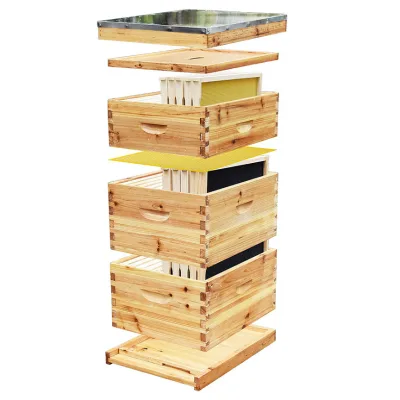
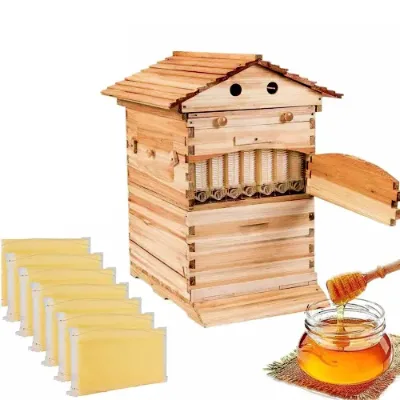

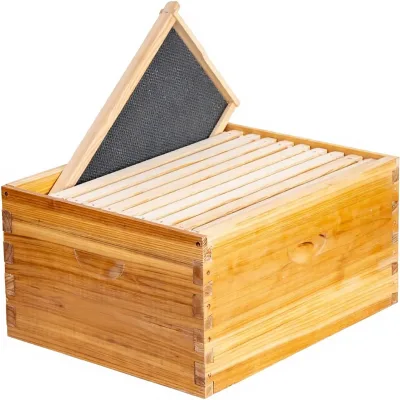
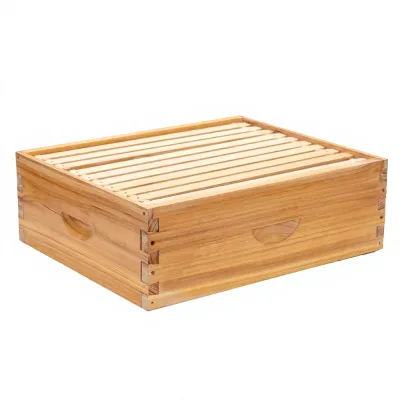
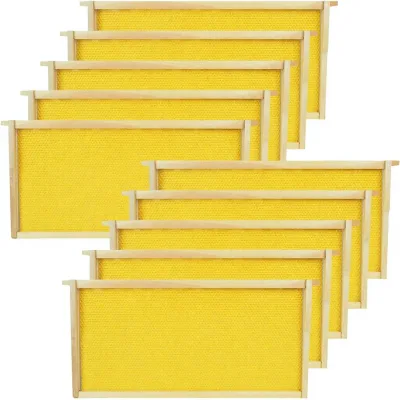
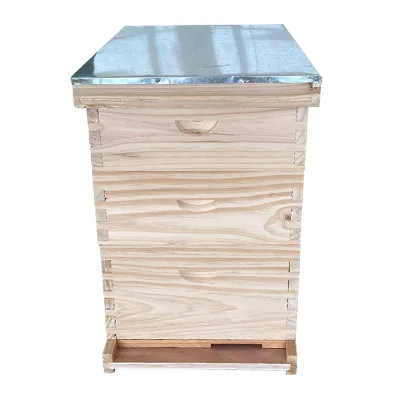
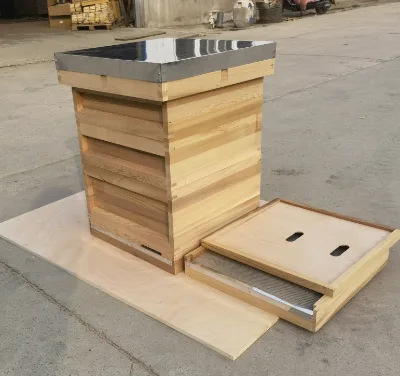
Comprehensive Sourcing Guide
Strategic Sourcing Guide for 2 Layer 10 Frame Beehives
Understanding the Core Product Configuration
The core keyword "2 layer 10 frame beehive" refers to a specific configuration within the Langstroth beekeeping system, designed to maximize space efficiency while maintaining the structural integrity required for healthy colony management. In the context of modern B2B procurement, this configuration typically implies a stackable unit comprising two distinct vertical tiers, each engineered to hold ten standard frames. The structural design relies on the precise interlocking of boxes, often referred to as supers or brood chambers, which allows beekeepers to add or remove layers based on seasonal colony growth without disturbing the entire hive structure.
Based on available market data, the product attributes for these units vary significantly in material composition and dimensional standards. Some listings identify the product as a "Langstroth Beehive" constructed from "China Fir," while others specify "New Zealand Pine" or a blend of "China Fir/Pine." This variation in material sourcing is a primary consideration for buyers, as wood density and natural resin content directly influence the hive's resistance to rot, insulation properties, and overall lifespan. The "2 layer" designation is not merely a count of boxes but a functional requirement for the "2/3 Layers Bee Hives Beekeeping Beehive 10 Frames" configuration observed in supplier catalogs. This setup often includes a "Bottom Box" and a "Super Box," creating a modular system where the bottom box serves as the brood chamber and the upper box acts as a honey super.
The dimensional specifications for these units are critical for frame compatibility. Standard observations indicate a "Deep Box Size" of approximately 50.541.324.5cm, designed to accommodate 10 frames with a height of 9 5/8 inches. In contrast, medium boxes may measure 50.541.316.8cm, corresponding to a 6 5/8 inch height. For a 2-layer system, buyers must verify if the supplier provides two deep boxes, two medium boxes, or a hybrid configuration. The "Bottom Box Size" standard varies, with some units listed at 555232cm and others at 505405242mm. These discrepancies highlight the necessity for buyers to confirm that the internal dimensions of the boxes match the frame sizes they intend to use, as frame spacing is a rigid requirement for successful beekeeping operations.
Technical Specifications and Material Integrity
When evaluating the technical specifications of a 2-layer 10-frame beehive, the material composition serves as the foundation for all other performance metrics. The observed product data lists "China Fir" and "New Zealand Pine" as primary materials. China Fir is often noted for its straight grain and resistance to decay, making it a common choice for hive bodies. New Zealand Pine, conversely, is known for its durability and workability. Some suppliers offer a composite material option described as "China Fir/Pine," which may aim to balance cost and performance characteristics.
The thickness of the wood is another critical specification. One observed standard lists a thickness of 20mm. This dimension is vital for thermal insulation; thicker walls help maintain a stable internal temperature, which is crucial for brood rearing during cold snaps and prevents overheating in summer. Buyers should verify that the 20mm thickness applies to the side walls of the boxes, as thinner walls can lead to rapid temperature fluctuations that stress the colony.
The packaging and weight specifications also provide insight into the build quality. A typical package for these units might weigh 21.5kg, containing 2 sets per package. The package dimensions are often listed as 555232cm or 584932cm. These figures are essential for logistics planning, as they determine shipping costs and storage requirements. The "Carton Packing" method observed in several listings suggests a protective outer layer, though the internal protection of the wooden boxes within the carton must be confirmed to prevent damage during transit.
Furthermore, the "Moisture-Proof" attribute is frequently highlighted in product names, such as "Moisture-Proof Bee Box." This suggests that the wood may undergo specific treatments or that the design includes features to mitigate water ingress. Buyers should inquire about the specific treatment methods used, as untreated wood is susceptible to warping and fungal growth in humid environments. The "Natural" color of the wood is standard, but some listings mention a "White" finish, which may indicate a paint or preservative coating. The application of such coatings should be verified to ensure they are non-toxic to bees and safe for honey production.
Compliance, Certification, and Safety Standards
In the B2B procurement of beekeeping equipment, compliance with safety and quality standards is paramount, particularly when the equipment is intended for commercial or large-scale apiary use. While the provided product data does not explicitly list specific international certification numbers (such as ISO or CE), it does reference "prod_standard" attributes like "Bottom Box Size: 555232cm" and "Cedar fir." These standards serve as internal benchmarks for the manufacturer but do not necessarily equate to third-party certification.
Buyers must verify that the materials used, particularly the wood and any preservatives, comply with the agricultural regulations of their destination country. For instance, wood imported from China must often meet specific phytosanitary standards to prevent the introduction of pests or diseases. The "prod_origin" is consistently listed as "China" or "Henan, China," which necessitates a thorough review of import regulations regarding timber from that region.
Regarding safety, the "After-Sales Service" and "Warranty" attributes provide some assurance of product reliability. A warranty period of "1 Year" or "1.5 years" is observed in the market data. This warranty should be scrutinized to understand what it covers, such as structural defects, warping, or finish peeling. The "Condition: New" attribute confirms that the products are not refurbished, but buyers should request documentation regarding the manufacturing process to ensure no harmful chemicals were used during the finishing or treatment stages.
Additionally, the "Application: Livestock" and "Application: Bee Farm" tags indicate the intended use. However, buyers should ensure that the equipment meets specific beekeeping industry standards, such as the spacing requirements for frames and the structural integrity needed to support the weight of honey supers. While no specific test results are provided in the source data, buyers should request evidence of structural testing, such as load-bearing capacity tests for the stacked boxes, to ensure the hive can withstand the weight of a full honey super without collapsing.
Cost Drivers and Pricing Dynamics
The pricing of 2-layer 10-frame beehives is influenced by several dynamic factors, including material costs, manufacturing complexity, and logistics. The observed price range in the market spans from $3.5 to $500 USD. This wide disparity suggests that the lower end of the spectrum may represent individual components, smaller kits, or basic models, while the higher end likely includes premium materials, complete kits with accessories, or bulk orders with added value services.
Material selection is a primary cost driver. "New Zealand Pine" typically commands a higher price than "China Fir" due to the cost of import and the perceived quality of the wood. Similarly, the inclusion of "Moisture-Proof" treatments or specific finishes can increase the unit cost. The "Customization" attribute available in the market allows buyers to tailor dimensions or materials, which often incurs a premium over standard configurations.
Packaging and shipping costs also play a significant role. The "Package Weight" of 21.5kg and the "Package Size" of 555232cm contribute to volumetric weight calculations in international shipping. Buyers should consider the "prod_packing" method, which is listed as "Carton" or "2 Sets/Package," as efficient packing can reduce shipping costs. The "MOQ" (Minimum Order Quantity) varies from 1 to 500 units. A lower MOQ of 1 allows for sample testing but may result in a higher per-unit cost, whereas larger orders can leverage economies of scale to reduce the price per unit.
Supplier Evaluation and Selection Criteria
Selecting the right supplier for 2-layer 10-frame beehives requires a rigorous evaluation process based on the available data points. The "prod_origin" is consistently "China," with specific mentions of "Henan, China" and "Changege, China." While these locations indicate the manufacturing base, buyers should verify the specific factory capabilities and reputation. The "brand_name" "XINGBO" is observed in some listings, but buyers should not rely solely on brand recognition without verifying the supplier's track record.
Key evaluation criteria include the supplier's ability to provide consistent quality across batches. The "Product Name" variations, such as "Langstroth Beehive," "Moisture-Proof Bee Box," and "China Beekeeping Equipment Manufacturers Bee Hive," suggest that some suppliers may use generic or overlapping terminology. Buyers should request detailed product specifications and compare them against the core requirements of a 2-layer 10-frame system.
The "After-Sales Service" and "Warranty" terms are critical indicators of supplier reliability. A supplier offering a "1 Year" or "1.5 years" warranty demonstrates confidence in their product quality. Buyers should also assess the responsiveness of the supplier to inquiries and their ability to provide technical support. The "Customization" availability is another positive indicator, suggesting a flexible manufacturing process that can adapt to specific buyer needs.
Quality Control and Inspection Protocols
Implementing a robust quality control (QC) protocol is essential when sourcing 2-layer 10-frame beehives. Given the variations in material and dimensions observed in the market, buyers should establish clear acceptance criteria before placing an order. The "Thickness: 20mm" specification should be verified through random sampling of the received goods. Any deviation from this thickness could affect the thermal properties and structural integrity of the hive.
Dimensional accuracy is another critical QC checkpoint. The "Deep Box Size" and "Medium Box Size" must match the specified measurements to ensure frame compatibility. Buyers should measure the internal dimensions of the boxes to confirm that they can accommodate 10 frames without excessive gaps or tight fits. The "Bottom Box Size" standard, which varies between 555232cm and 505405242mm, must be clearly defined in the purchase order to avoid confusion.
The finish and treatment of the wood should also be inspected. The "Moisture-Proof" claim should be validated by checking for signs of water resistance, such as the absence of warping or discoloration after exposure to moisture. The "Natural" or "White" color should be consistent across all units, with no visible defects such as knots, cracks, or splinters that could compromise the hive's structure.
Long-Term Procurement and Operational Considerations
For long-term procurement, buyers should consider the lifecycle of the beehive and the potential for future expansion. The "2/3 Layers" configuration offers flexibility, allowing beekeepers to add a third layer as the colony grows. The "Product Type: 2Deep Box +3Medium Box" observation suggests that some suppliers offer hybrid kits that can be adapted for different stages of beekeeping.
The "Warranty" period is a key factor in long-term planning. A "1 Year" or "1.5 years" warranty provides a safety net for early defects, but buyers should also consider the durability of the materials. "China Fir" and "New Zealand Pine" are known for their longevity, but the effectiveness of these materials depends on the quality of the wood and the treatment applied.
Logistics and storage are also important considerations. The "Package Size" and "Package Weight" data indicate that these units are relatively bulky. Buyers should plan for adequate storage space and efficient logistics to handle the "Carton Packing" and "2 Sets/Package" configurations. The "MOQ" flexibility, ranging from 1 to 500, allows buyers to start with small orders and scale up as their operations grow.
In conclusion, sourcing a 2-layer 10-frame beehive requires a careful balance of technical specifications, material quality, and supplier reliability. By focusing on the observed data points and verifying critical dimensions and materials, buyers can make informed decisions that ensure the long-term success of their beekeeping operations. The availability of customization and after-sales support further enhances the value proposition, making these hives a viable option for both small-scale and commercial beekeepers.
FAQs
What materials are used for 2 layer 10 frame beehives?
These beehives are typically constructed from China Fir, New Zealand Pine, or a blend of both materials. The wood thickness is commonly 20mm to ensure proper insulation and structural integrity for the colony.
Can I customize the dimensions of the 2 layer 10 frame beehive?
Yes, customization is available for these units to meet specific beekeeping requirements. Buyers can request tailored sizes, though standard deep boxes usually measure 50.5 by 41.3 by 24.5 cm for 10 frames.
How much does a 2 layer 10 frame beehive cost?
The price range for these units spans from 3.5 to 500 USD depending on material and configuration. Factors like New Zealand Pine usage or moisture-proof treatments can influence the final unit cost significantly.
What is the minimum order quantity for 2 layer 10 frame beehives?
The minimum order quantity varies between 1 and 500 units depending on the specific supplier and product model. Some listings allow single unit purchases while others require bulk orders to activate pricing tiers.
Which warranty terms apply to 2 layer 10 frame beehives?
Warranty periods typically range from 1 year to 1.5 years for new units. Buyers should verify if the warranty covers structural defects or finish peeling before finalizing the procurement agreement.
How are 2 layer 10 frame beehives packaged for shipping?
Units are commonly packed in cartons with dimensions around 55 by 52 by 32 cm per package. Each package typically weighs 21.5 kg and may contain two sets of the beehive boxes.
Where are 2 layer 10 frame beehives manufactured?
These products originate from China, with specific manufacturing hubs located in Henan and Changege regions. Buyers should confirm the exact place of origin to ensure compliance with local import regulations.